
Introduction
It is among the blessings of Allah (swt) upon the Muslim that He enables him to fast in Ramadan and spend its nights in prayer. It is a month in which good deeds are multiplied and people are raised in status, when Allah (swt) releases some people from the Fire. So the Muslim should strive to make the most of this month and the goodness it brings; he must hasten to spend his life in worship. How many have been deprived of this month by sickness, death, or error.
The Muslim should make the best of his time during this month; he has an unavoidable duty to his children, to educate them well and educate them well, to incite them to all kinds of good and accustom them to it – for the child will grow up in the manner to which his father accustoms him.
19 tips
During these blessed days there is a role for the father and the mother to make the best use of this time, and we can give the following advice to the parents:
1 – Controlling the fasting of the children and encouraging those who fall short in this regard.
2- Reminding them of the true nature of fasting, and that it is not just the giving up of food and drink, but that it is a means of attaining taqwa (piety), and that it is an opportunity to forgive sins and to atone.
It was narrated from Abu Hurayrah that the Messenger of Allah (swt) SAWS (peace and blessings of Allah (swt) be upon him) ascended the minbar and said, “Ameen, Ameen, Ameen.” It was said to him: “O Messenger of Allah (swt), why did you do that?” He said, “Jibreel said to me, ‘May Allah (swt) rub his nose in the dust, that person who comes to Ramadan and his sins are not forgiven,’ and I said, ‘Ameen’.
Then he said: ‘May Allah (swt) rub his nose in the dust, that person who lives to see his parents grow old, one or both of them, but he does not enter Paradise,’ and I said: ‘Ameen ‘. Then he said: ‘May Allah (swt) rub his nose in the dust, that person in whose presence you are mentioned and he does not send blessings upon you,’ and I said: ‘Ameen.’”
Narrated by Ibn Khuzaymah, 1888; al-Tirmidhi, 3545; Ahmad, 7444; Ibn Hibbaan, 908. See Saheeh al-Jaami’, 3501.
3 – Teach them the etiquette and rules about eating, such as eating with the right hand of what is directly in front of them; reminding them that extravagance is haraam and is harmful to the body.
4 – By not letting them eat iftar too long so that they miss praying Maghrib in the assembly.
5 – Remind them of the plight of the poor and needy who cannot find even a mouthful of food to satisfy the fire of hunger; reminding them of the plight of those who have migrated or are fighting in jihad for the sake of Allah (swt).
6 – These gatherings provide an opportunity to bring kin together and to maintain the ties of kinship. This custom still exists in some countries, and it is an opportunity to reconcile and repair the broken ties between kin.
7 – Helping the mother prepare the food and tidy up.
8 – Remind them to pray qiyam (taraweeh) and prepare for it by not eating too much and getting ready in time to perform the prayer in the masjid.
9- As for suhoor, the parents should remind the family of the barakah (blessing) of suhoor and that it gives a person the strength to fast.
10- Allow enough time for the Fajr prayer so that those who have not prayed Witr can do it, and so that those who have delayed their prayer until the end of the night can pray, and so that everyone du’aa’ to his Lord can make as he wishes.
11- Paying attention to praying Fajr on time in the congregation in the mosque, for those who are obligated to do so. We have seen many people who wake up at the end of the night to eat, then go back to bed and neglect the Fajr prayer.
12- It was the custom of the Prophet SAWS (peace and blessings of Allah (swt) be upon him) in the last ten days of Ramadan to stay up at night and wake his family. This indicates that the family should pay attention to making the most of this blessed time in doing things that please Allah (swt), may He be glorified and exalted. So the husband should awaken his wife and children to do that which will bring them closer to their Lord.
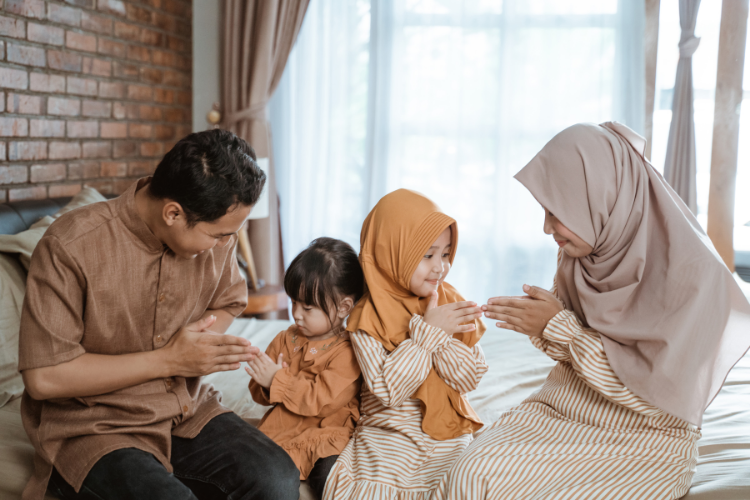
13- There may be small children in the house who need to be encouraged to fast, so the father should exhort them to get up for suhoor, and encourage them to fast by praising them and giving a reward to those who have done it all the time. month or half of it, and so on.
It was narrated that al-Rubayyi’ bint Mu’awwidh said: On the morning of ‘Ashoora’ the Prophet SAWS (peace and blessings of Allah (swt) be upon him) sent a word to the villages of the Ansaar saying: “Whoever began the day by not fasting, let him not eat for the rest of the day, and whoever began the day by fasting, let him fast.” They said: We used to fast and make our children fast, [and take them to the mosques] and make toys for them from wool, and then if one of them cried for food, we gave him those toys for iftar .
Narrated by al-Bukhaari, 1859; Muslim, 1136 – the words in square brackets are narrated by Muslim.
Al-Nawawi said:
This hadeeth shows that we should train children to perform acts of worship and get them used to it, but they are not accountable. Al-Qaadi said: It was narrated from ‘Urwah that when they are able to fast, it becomes obligatory upon them. This is a mistake which is refuted by the saheeh hadeeth: “The Pen is lifted from three: from the child until he reaches puberty…” And Allah (swt) knows best. Sharh Muslim, 8/14
14- If possible, the father and mother should take the family for ‘Umrah in Ramadan, and that is something that will benefit themselves and their family in the Hereafter, because ‘Umrah in Ramadan has the same reward as Hajj. It is better to go at the beginning of Ramadan to avoid the crowds.
15 – The husband should not overburden his wife with the preparation of food and delicacies. Many people use this month to prepare fancy food and drinks, and they go to great lengths. This detracts from the sweetness of this month and goes against the purpose of fasting, which is to attain piety.
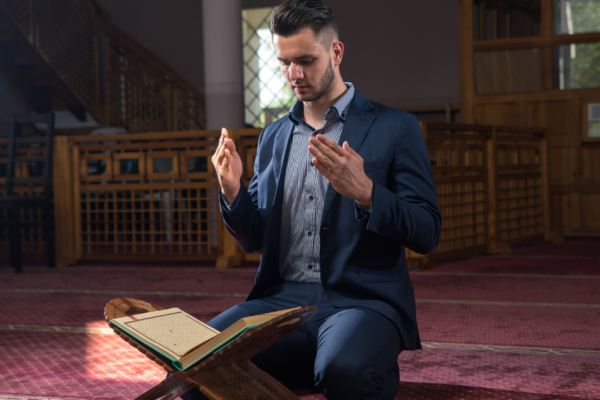
16 – The month of Ramadan is the month of the Qur’an, so we suggest that every family gather to read the Qur’an. The father should teach his family to recite the Quran and help them understand the meaning of the verses. In the same meeting they can also read a book about the rules and etiquette of fasting. Allah (swt) has enabled many scholars and seekers of knowledge to write books that can be used for preaching and teaching during Ramadan; the books are divided into thirty volumes so that each day one topic can be read, and this will benefit everyone.
17 – They should be encouraged to spend and check with their neighbors and the needy.
It was narrated that Ibn ‘Abbaas said: The Messenger of Allah (swt) SAWS (peace and blessings of Allah (swt) be upon him) was the most generous of the people, and he was most generous during Ramadan when Jibreel met. He would meet him every evening and read the Qur’an with him. The Messenger of Allah (swt) SAWS (peace and blessings of Allah (swt) be upon him) was more generous than the blowing wind. Narrated by al-Bukhaari, 6; Muslim, 2308.
18 – The parents should restrain their families and children from staying up late at night and wasting their time on things that are of no use, let alone on things that are haraam. For the devils among men are more active in this month in promoting evil things and deeds of immorality to those who fast, during the nights of Ramadan and during the days.
19 – They should remember the family gathering in Allah (swt)’s Paradise in the Hereafter, and the great joy of meeting there under the shadow of His throne. These blessed gatherings in this world and coming together to obey Allah (swt) by seeking knowledge, fasting and praying are the means leading to the attainment of happiness.